Making a complex NHS feel like one service
Helping shape the foundational journeys of the NHS App, turning fragmented systems, rules and services into something patients could understand and use.
The challenge
In 2019, the NHS App set out to give patients one place to manage core healthcare tasks themselves. But behind this simple experience sat different GP systems, permissions, services and some gnarly legacy technology. We needed to make these differences understandable without making patients understand the machinery of the NHS.
My role
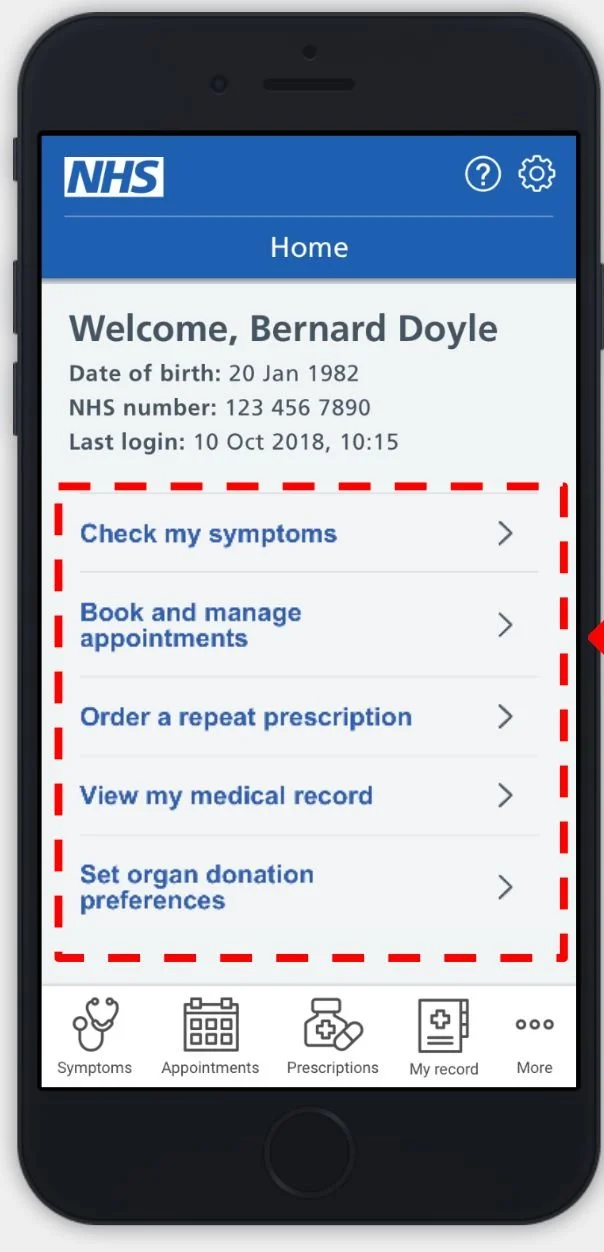
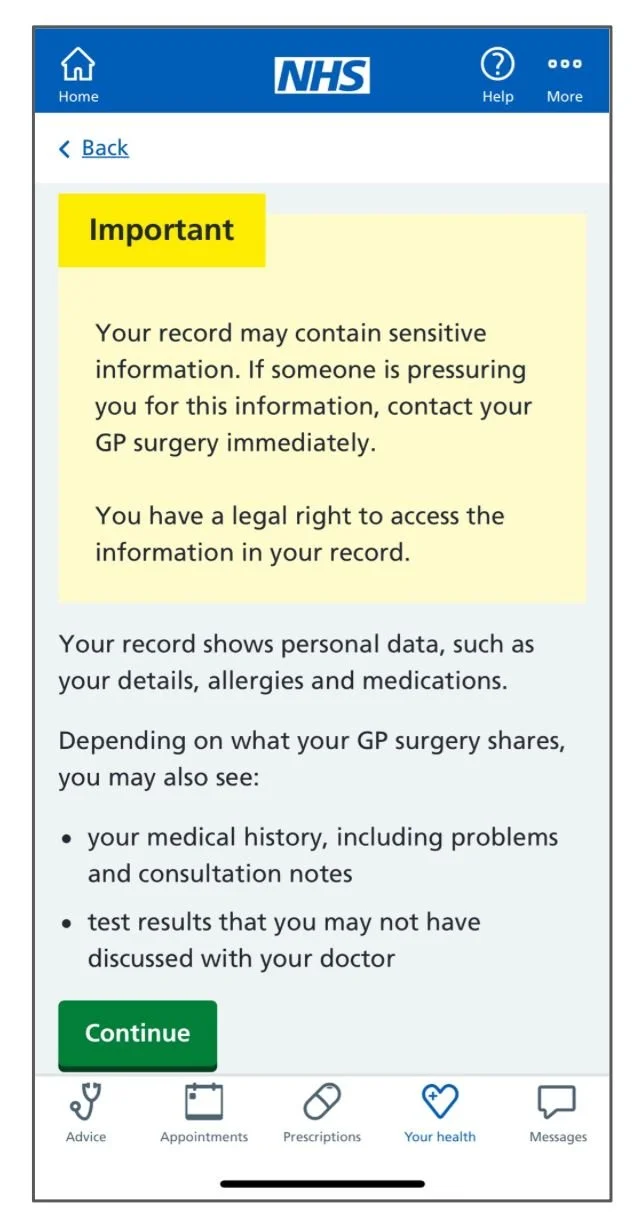
As the sole initial Content Designer, I led content for the app's core features: GP appointments, repeat prescriptions and medical records. I worked closely with Interaction Design, Service Design and User Research to shape interactions and information architecture, while setting health literacy and accessibility as the true foundations for the experience.
What we designed
We designed and iterated the core journeys through continuous usability testing. We used evidence to change not only the language but the interaction itself. And as new services and third parties joined the app, I also helped shape an information architecture that could grow with it.
Outcome
By the time I left, the foundational appointments, prescriptions and medical record journeys were established, alongside a growing Content Design team equipped to take them forward. Those core services became part of the foundation on which the NHS App continued to grow.
42.2 million registered users
80 million login sessions per month
7.6 million repeat prescriptions ordered
Source: NHS App statistics
Role: Lead Content Designer · When: 2019 - 2020 · Focus: product content · IA · health literacy · accessibility · Team: Interaction Design · User Research · Service Design